Spring Thunderstorm Asthma
Areas of the Murrumbidgee region are prone to spring thunderstorm asthma events. In NSW, the greatest risk of thunderstorm asthma occurs across southern NSW and the Riverina.
Thunderstorm asthma alerts
The MLHD Public Health Unit monitors grass pollen counts and weather forecasts throughout spring and issues alerts when conditions indicate an increased risk of thunderstorm asthma.
Register to receive SMS alerts when pollen counts are high and thunderstorms are predicted.
-
You may be at greater risk of thunderstorm asthma if you:
Have asthma, especially if it is poorly controlled or worsens during spring.
Have hay fever (allergic rhinitis).
Experience wheezing, chest tightness or breathing symptoms during spring.
Do not take prescribed asthma preventer medication regularly.
Even people with hay fever who have never been diagnosed with asthma can be affected.
-
Hay fever symptoms
Runny or blocked nose
Sneezing
Itchy, watery eyes
Itchy skin
Asthma symptoms
Wheezing
Coughing
Chest tightness
Shortness of breath
If you develop breathing symptoms during or around a thunderstorm, take them seriously and seek medical advice promptly.
-
People with poorly controlled asthma are at greater risk during thunderstorm asthma events. Before spring, arrange an asthma review with your GP and make sure your asthma is well controlled.
Consider completing an Asthma Control Questionnaire (ACQ5) to help assess your current symptom control.
-
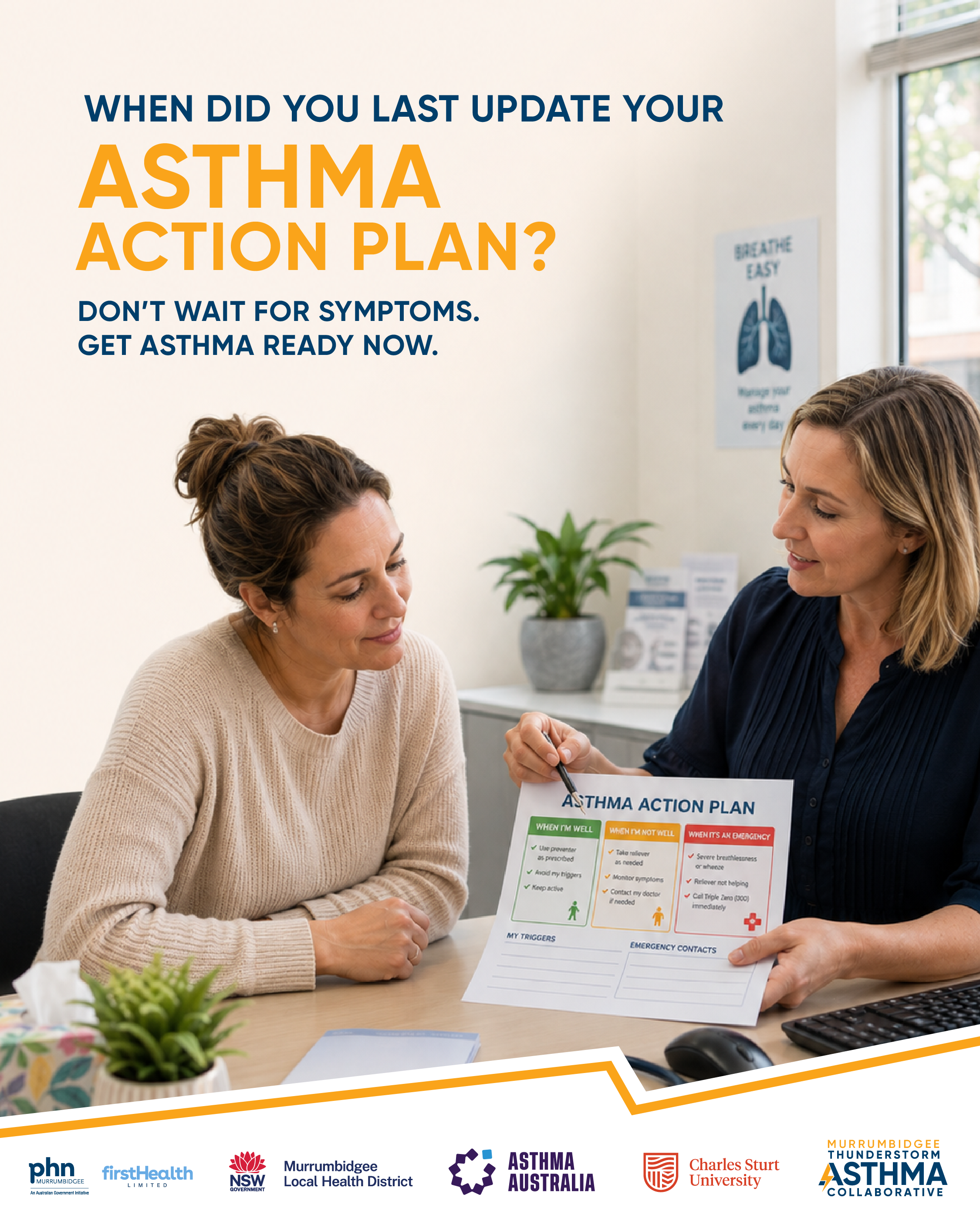
An Asthma Action Plan helps you recognise worsening symptoms and know what action to take.
Talk to your GP about developing or updating your Asthma Action Plan and keep a copy somewhere easy to access.
-
Before spring
See your GP for an asthma review.
Update your Asthma Action Plan.
Make sure your medications are current.
Check your inhaler technique.
Learn the signs of an asthma emergency.
During spring and thunderstorm season
If you are prone to asthma:
Continue taking your preventer medication as prescribed.
Keep your reliever medication with you.
Monitor weather forecasts and thunderstorm asthma alerts.
Stay indoors where possible when thunderstorms are forecast.
Close windows and doors.
Set air conditioning to recirculate air if available.
-
Hay fever is a common allergy caused by pollen from grasses, trees and other plants. Hay fever can make asthma more difficult to control and may increase your risk of thunderstorm asthma.
Simple ways to reduce exposure to pollen include:
Checking pollen forecasts.
Keeping doors and windows closed on high-pollen days.
Showering and changing clothes after being outdoors.
Avoiding lawn mowing where possible.
Following your treatment plan.
Thunderstorm asthma can occur when high levels of grass pollen combine with thunderstorm activity. During a storm, pollen particles can be swept up into clouds and broken into very small fragments. These particles can then be carried on storm winds and breathed deep into the lungs, triggering asthma symptoms or severe asthma attacks.
Thunderstorm asthma can be life-threatening and can affect people who have never been diagnosed with asthma.
Need support?
Asthma Australia provides free support and education through its Asthma Educators, who can answer questions about asthma, medications, symptom management and Asthma Action Plans.
Resources for health professionals
Health professionals can access a range of clinical resources to support asthma assessment, patient education and management.