Aged Care Consortium connecting care across the Murrumbidgee
Representatives participated in the Murrumbidgee Aged Care Consortium during 2025–2026
Meetings brought aged care representatives and community advocates together to share knowledge, identify gaps and develop locally relevant responses
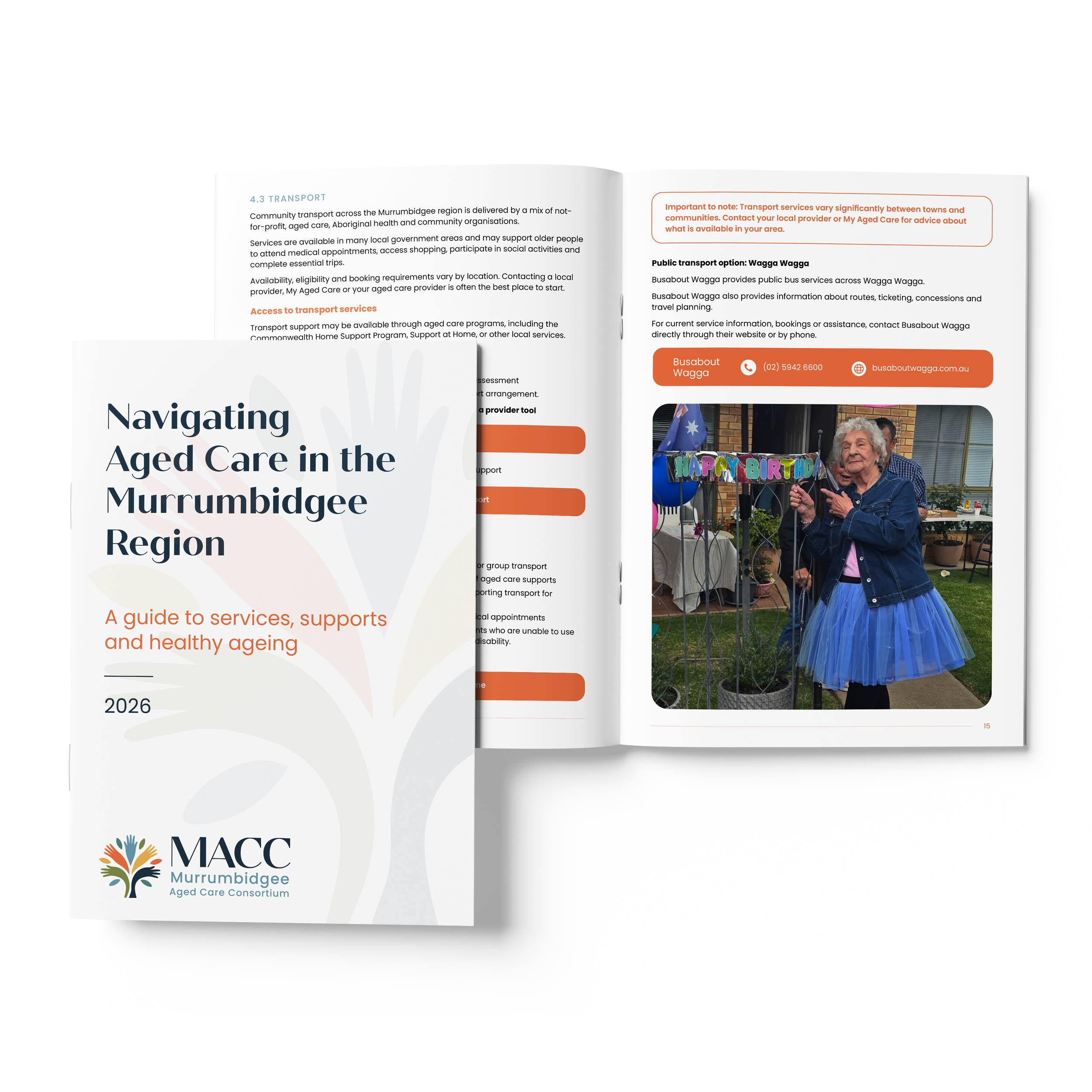
Development commenced on a regional aged care directory to help older adults, families, carers and service providers find and navigate local support
Supporting older adults to live well in the communities they call home takes more than individual services. It takes a connected system around them.
Across the region, the Murrumbidgee Aged Care Consortium brings together aged care providers, health professionals, community organisations, people with lived experience and community members to understand local challenges, share knowledge and develop practical responses.
That role is particularly important in a sector that can be difficult to navigate.
“When I joined the Aged Care Consortium, I was amazed at the innovative programs that existed within the Murrumbidgee for older adults,” Consortium Chair Dr Maree Bernoth said. “But the problem is a lot of older adults are not aware of them.”
Improving that connection became an important focus for the Consortium during 2025-2026, with work commencing on a regional aged care directory. The directory aims to bring information about services and support together in one place, making it easier for older adults, their families and carers to understand what is available and where to find it. It will also provide a practical resource for service providers helping people navigate the aged care system.
More broadly, the Consortium provides a forum to identify gaps, share resources and expertise, and explore solutions grounded in the realities of ageing in regional communities.
While connecting people, knowledge and services is a focus across MPHN’s healthy ageing and palliative care work, the Consortium brings a unique perspective through its cross-sector membership and representation of people with lived experience.
For Dr Bernoth, that collaboration is essential.
“We’re rural, we’re regional, we’re small communities and we want to support our older adults to remain in the community in which they’ve aged,” she said. “To make that possible, we need to collaborate, we need to work together, we need to share ideas.”
Ultimately, the goal is a system that older people can understand and navigate with confidence – creating, as Dr Bernoth described it, “a community of older adults who are empowered, knowledgeable and able to navigate through the aged care system and services.”