Building better health checks through stronger relationships
Health Checks promoted across mainstream general practices in the Murrumbidgee
Of Aboriginal and Torres Strait Islander people received a 715 Health Check
MPHN partnered with Marathon Health to strengthen practice education, recall and engagement
A regular health check can help identify health concerns early, but for Aboriginal and Torres Strait Islander people, getting through the door is only part of the equation. Feeling culturally safe, welcomed and understood matters too.
During 2025-2026, Murrumbidgee Primary Health Network (MPHN) built on its work to strengthen culturally safe care within mainstream general practice by increasing awareness and uptake of 715 Health Checks.
The work followed the development of MPHN’s First Nations General Practice Toolkit in 2024 and its rollout to practices across the Murrumbidgee’s four sectors in 2025. In 2026, MPHN Aboriginal Health and Wellbeing Manager Maxine Little partnered with Marathon Health Aboriginal and Torres Strait Islander Health Project Officer Hope Cooper to visit mainstream practices and provide practical education about 715 Health Checks.
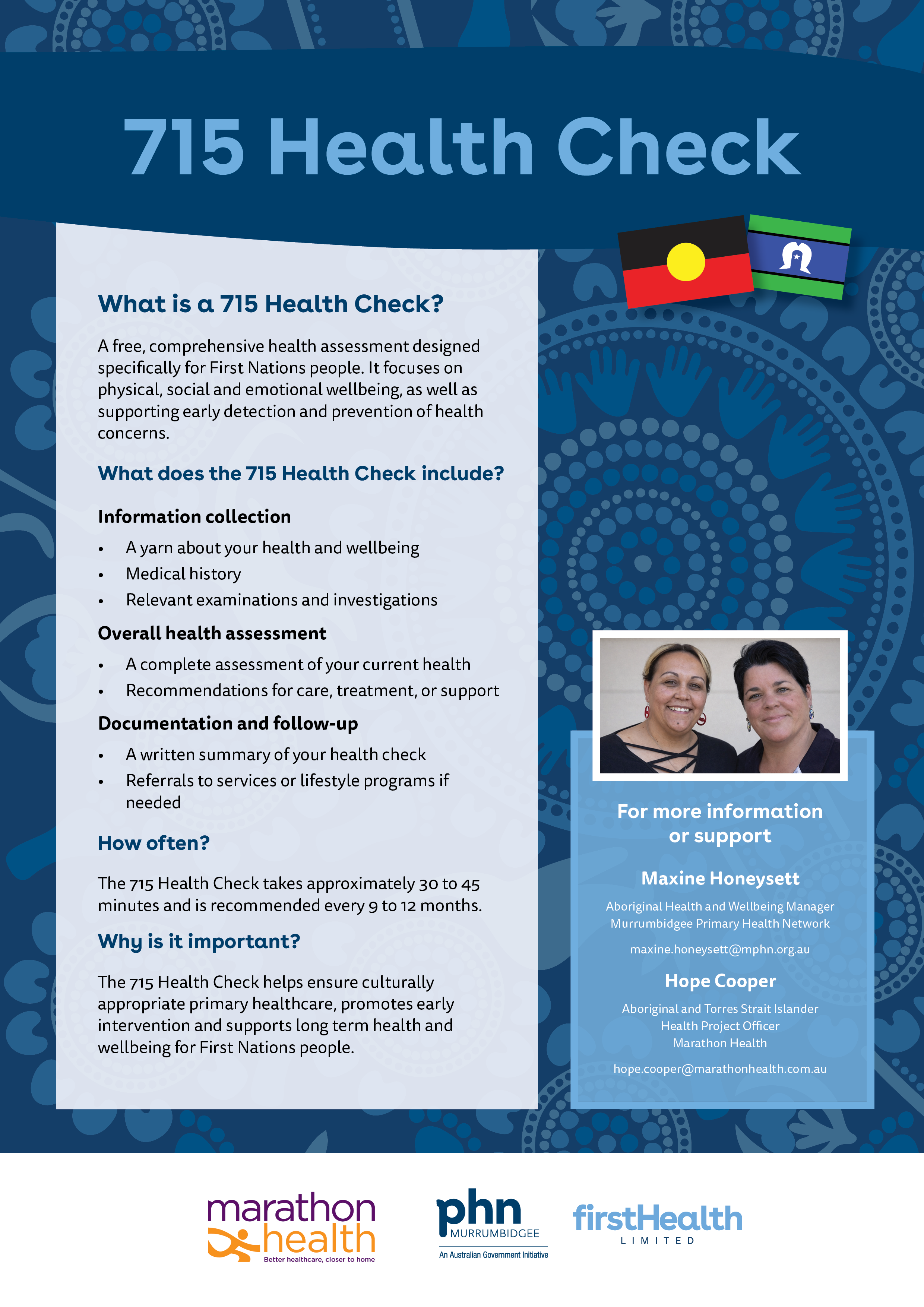
The free, comprehensive assessment considers physical, social and emotional wellbeing and provides an opportunity for early detection, prevention, referral and ongoing support. For Ms Little, however, the opportunity extends beyond completing a health assessment.
“It’s not about ticking the box to the MBS (Medicare Benefits Schedule) item of 715,” she said. “It’s actually talking about how we can educate the clients and community about their health.”
Practice visits have focused on practical changes that can make a difference, from identifying First Nations patients and establishing effective recall systems to displaying Aboriginal and Torres Strait Islander flags, artwork and culturally appropriate health information. Ms Little said practices welcomed the support, with some recognising through the process that their 715 Health Check numbers were low.
The partnership with Marathon Health also helps provide consistent messaging and demonstrates how MPHN and its commissioned services can work together to support better outcomes for Aboriginal and Torres Strait Islander people accessing mainstream care.
Ultimately, the aim is to create an ongoing relationship with healthcare – one where people are invited back, feel safe returning and have the time and opportunity to talk about their health as a whole.