Middle East Respiratory Syndrome (MERS)
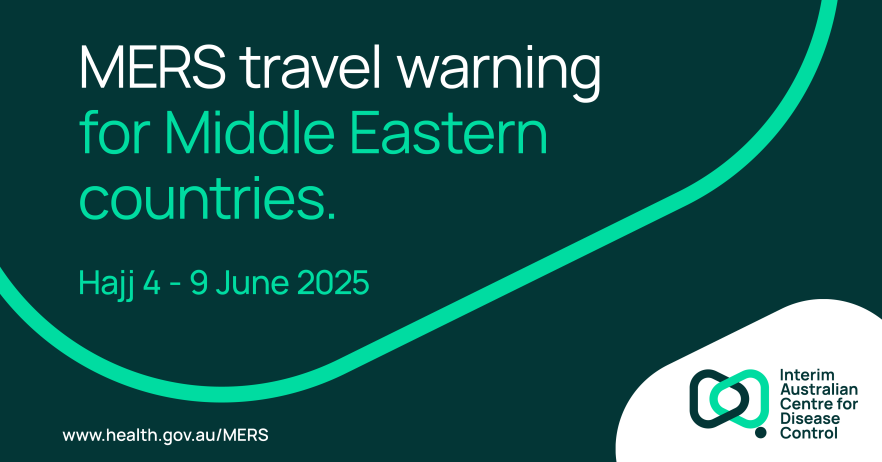
More than 2,000 Australians are expected to travel to Saudi Arabia for Hajj, the annual Islamic pilgrimage to Mecca, taking place from 4–9 June.
Travellers are at risk of contracting Middle East Respiratory Syndrome (MERS), a rare but serious respiratory illness caused by MERS-coronavirus (MERS-CoV). The disease originated in Middle Eastern countries and is linked to contact with camels, camel products, or transmission from an infected person. Symptoms can include fever, cough, and difficulty breathing. Other symptoms may include muscle pain, diarrhoea, vomiting, and nausea.
People making the pilgrimage are advised to ensure they are up to date with all recommended immunisations before travelling.
Further information for travellers is available at:
Department of Health, Disability and Aged Care: MERS Information
Smartraveller: Hajj Travel Advice
An information card has also been developed to support Australian participants.
Advice for GPs
General practitioners should remain alert to patients presenting with symptoms of MERS following their return from the pilgrimage. MERS is a nationally notifiable disease; any suspected or confirmed cases must be reported immediately.
Management guidelines for general practice are available here:
Management Guidelines for MERS-CoV in General Practice